
Do you want to know a secret about starting a successful business? The secret to all businesses is only two words. These two words will help you stay focused on what is most important in business and how you can be successful when you start a business.
Two Words to Be Successful Starting a Business and Staying In Business
Serve others.
In all my years as a business owner, I have tried hard to figure out why businesses stay in business and why others fail. What it all comes down to is who serves the most customers and who serves them the best.
To be completely honest, starting a business is a straight forward process. Here it is summed up for you:
- Find a need that others have
- Figure out a solution to that need
- Make sure you can replicate that solution over and over again
- Get the word out to everyone that you have the solution to their problems
- Provide that solution better than anyone else can
- Charge more than all your expenses while giving the solution to your customers
- The more people you serve, the more money you make
I know it sounds simple and super high overview. But that is really all it is when it comes to starting a business and running a successful business.
Amazon as a Business that Serves Others
Think of the huge company Amazon.com
This is a company that serves so many people AND makes their customers lives easier. Who ever though 2 day shipping would be possible for anything without paying for shipping?!
What Amazon does is it serves its customers needs and does it better than just about anyone.
Listen to the Podcast Episode
You Can Start A Business Serving Others
While some people feel hesitant and even afraid, you shouldn’t let the difficulties and hurdles associated with running a business to stop you from starting your very own venture. Other businesses might have failed and closed down, but this shouldn’t discourage you from achieving success with your business.
No matter where you are right now, whether you are just planning to start a business, in the process of getting started, or already have your own business, it wouldn’t hurt to know the necessary steps you need to take to kick start your career as an entrepreneur.
How to Start a Business from Scratch
To start a business from scratch, here are the things you should do:
Decide on the type of business you want to start.
To decide on the type of business you should start, it helps if you are familiar with the specific market you are interested in. You also need to be clear about the things you can offer and how you will be able to serve your customers differently from other similar businesses.
Determine if it is possible to protect your business idea.
It is important that you determine how you will be able to future-proof and protect the idea you have for your business. It might be a wise move to trademark the name of your business.
Also, check if your name is unique in your field and doesn’t have any negative implications in other languages, especially if you have plans to do business overseas.
Check if your business idea is doable.
One of the key aspects of starting a business is making sure that it fills a market gap. The products or services you will offer should resonate with potential customers.
- Will they be able to afford your prices?
- Are the customers already doing something to solve the issue you intend to solve with your new idea?
- How does your business idea compare to others?
Watch the entire episode here:
Develop your business plan.
It is crucial to have a business plan if your goal is to achieve long-term growth and success.
The key headings of your business plan will inform you of the areas you have to cover so that your business will be sustainable for a long time.
Your business plan will act as your roadmap you have to follow to achieve your goals and objectives.
Take things slowly.
Since you are just getting started with your business, avoid putting all your eggs in just one basket.
You should also refrain from spending all your available resources on something with no proof of market potential.
To start a business from scratch, it is advisable to take things slowly but surely.
Step-by-Step Process to Start a Business
Follow these steps to kick-start a business in your entrepreneurial career:
Refine your business idea.
If you are already planning to start a business, chances are you have a good idea of the products you wish to sell or the market you would like to enter.
Research about the existing businesses in the industry first, learn what existing brand leaders are already doing, and determine how you could do things better.
Once you are sure that you can deliver something other businesses can’t or can do the same thing but cheaper and faster, it means that you have a solid idea, and you are prepared to proceed to the next step.
Write your business plan.
After you have a good idea in place, writing your business plan comes next.
Your business plan should state your business’s purpose, your target market, your goals and objectives, and your financial plans.
Your business plan will help you determine where your business is going, how this will overcome possible difficulties, and the things you can do to sustain your business.
Evaluate your available finances. for the business
A price will always be involved if you want to start a business. Thus, you have to determine how you will cover these costs. Are your finances enough for funding your startup, or do you need to borrow some cash?
If you plan to leave your job to focus on the business, do you have enough money to support yourself until your business makes a profit?
Make sure you know where and how to secure funds to ensure that your venture won’t be a failure.
Determine the legal structure of your business.
Before registering your business, you must decide on its type of entity. The structure of your business will legally affect it, from filing taxes to personal liabilities, if things go wrong.
Register with the IRS and the government.
For your business to be officially recognized as a business entity, registering with the government is a must.
After that, you will need to get an employer identification number (EIN) from the IRS.
Although this is not a requirement for sole proprietorships without employees, you can still apply for this to separate your business and personal taxes and save yourself from any trouble if you hire an employee later on.
Get an insurance policy.
Getting the appropriate insurance for your business is one of the key steps to starting a business that should be done before its official launch. Dealing with incidents like theft, property damage, or customer lawsuit can be expensive, so it is wise to be properly protected.
Form your team.
Unless you plan to run your business on your own with no employees, you will need to form a great team for your business to officially kickoff.
People build your product, and as such, you need to identify your founding team, understand the existing gaps, and determine when and how you will address them. It is also important to know how your team will be working together.
Define their responsibilities and roles, divide labor, and determine how the team can work together when someone is not around to save yourself from headaches later.
Pick your vendors.
It can be overwhelming to run a business, and even if you have your own team, you won’t be able to pull off everything by yourself. This is when third-party vendors can come in handy.
Companies in various industries from business phone systems to HR are there to work with you and assist you in running your business.
Create your brand and advertise it.
Before you begin selling your products or services, it is important to create your brand and acquire followers who will be ready to make a purchase once you open the figurative and literal doors of your business.
Once you have a brand in place, create your marketing plan, and advertise to build a clientele.
Focus on business growth.
Your initial launch and sales are just the start of your career as an entrepreneur.
To earn profits and keep your business afloat, you need to continue to grow it. It will take effort and time, but you can expect to get exactly what you put into your business.
How to Start a Business at Home
Honestly, there has never been a better time in the history of the world to start a home based business. With the internet, you can easily do it and make loads of money.
You can even flip items like a flea market flipper.
The best businesses at home are those that you start because the work is your true passion and the process is what truly interests you.
Knowing how to start a business at home can give you flexibility in terms of making money and spending your time. However, the process doesn’t happen overnight, and it also doesn’t guarantee financial success.
This will require long-term commitment as well as a clear and realistic understanding of all the work involved.
To start a business at home with a good earning potential and a solid foundation, you need to invest resources and time to identify the best business that suits you and create a plan.
Follow these steps to start your business at home:
- Assess your own talents.
- Examine your personal skills.
- Combine your skills and talents to come up with business ideas.
- Determine if your ideas will work as a business at home.
- Identify the potential profit.
- Develop a business plan.
How to Start a Business Online
There is a proven and tested sequence of starting a business that you can follow to ensure your success once you have decided to launch your own business online.
There are already many people who have started and grown successful businesses by following these steps:
- Identify a need and address it.
- Write copy that will sell.
- Build and design an easy-to-use website.
- Generate website traffic using search engines.
- Establish your reputation as an expert.
- Follow up with subscribers and customers with email.
- Boost your income through upselling and back-end sales.
The internet is a quickly changing world that a single year online feels equivalent to five years in the actual world. However, the principles of starting and growing a flourishing online business remain unchanged.
If you are just getting started with your own small online business, make sure you stick to the sequence above.
If your online business has been up for some time, conduct a quick review to check if you are neglecting or haven’t got around to doing a certain step. You can never go wrong if you follow the basics.
Ideas for Starting Your Own Business
If you want to start your own business but you lack the time or startup money to invest in the development of specialized skills, there are several easy business ideas that you can try.
All these ideas are businesses that you could start inexpensively. A few of them can even be started without anything if you already have the necessary equipment. These suggestions can help you start your own business fast.
Just remember, however, that business ideas are not your get rich quick type of business. Instead, what these easy and inexpensive businesses provide to those who are ready to work on them is livelihood and the satisfying feeling of being your own boss:
- Virtual assistant
- Tutoring
- Consultant
- Accountant
- Tax preparer
- Financial planner
- Editorial services
- Business plan service
- Marketing copywriter
- Freelance graphic designer
- Local tour guide
- Event planning
- Baker
- Electronics repair
- Home inspection
- Property management
- Interior decorator
- House painter
- Snow removal and grass cutting services
- Makeup artist
- Photographer
- eBay selling
- Errand service
- Flea market vendor
- Personal trainer
- Personal concierge
- Public speaker
- Pet sitting
- Ride-sharing driver
- Delivery services
- Bicycle repair
- Golf coach
- Music lessons
- Scrapbooking
- Residential cleaning services
- Boat cleaning
- Hauling services
- Siding and gutter cleaning
- Landscaping and gardening services
- Painting
- DJing
- Yoga instruction
How to Start a Business with No Money
These are the steps to start a business if you don’t have any money to improve your chances of launching a venture that will generate sales and earn profits:
- Start with what you already have.
- Consider who you know.
- Invest the amount you can afford to lose.
- Adapt and experiment
The steps to start a business should be followed properly to ensure that you will begin your venture on the right foot.
While it can be tempting to just take a dive into the unknown, it wouldn’t hurt to at least have a guideline that you can stick to during the process. Don’t expect that your journey into entrepreneurship will only be filled with good things.
Just like any endeavors in this world, starting a business has its own ups and downs. But if you are prepared for what lies ahead, you can be well on your way to success in no time!
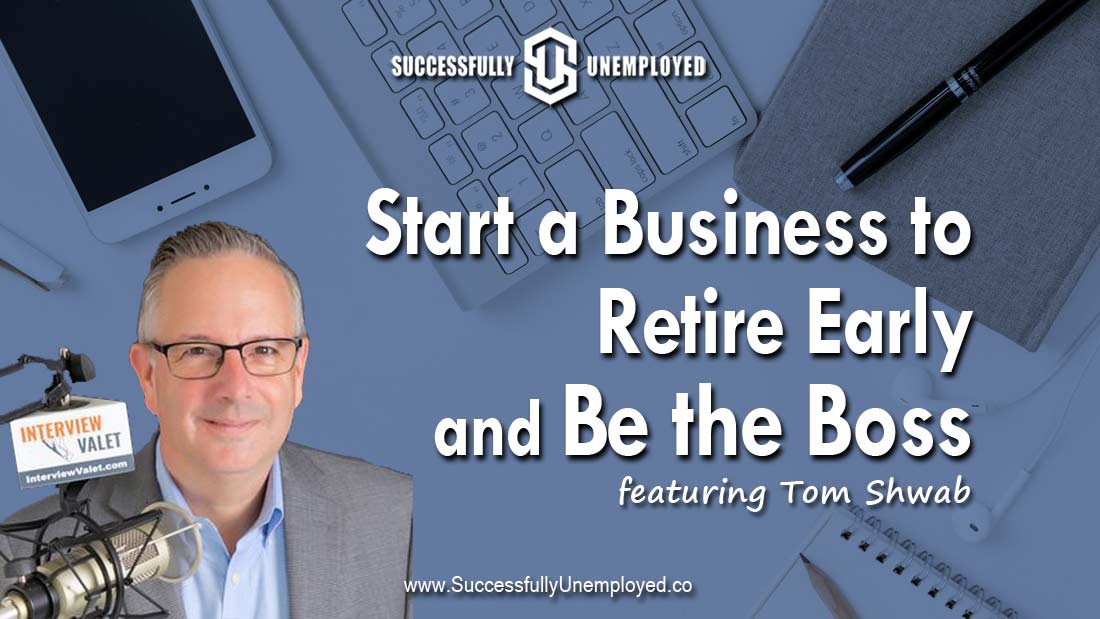
You can start a business just like Tom Schwab has done many times over. He is the person I recently interviewed about all his businesses he built.
Tom, Take us back to before when you had a job. Talk about what you were doing before and how you got into this business.
The idea of being successfully unemployed was unheard of, when Tom was growing up. He was raised in the Midwest suburbs of Chicago, and security came from having a job.
He went to the Naval academy and was in the Navy and, with that, all he had to do was stick around for 20 years. In 1992, peace broke out and it was bad for the industry.
By that time, he was married and he had a couple of kids and he didn’t want to stick around for another 15 years. His dad thought he was crazy for leaving.
He then went to work for a Fortune 500 company. After a few years, he wanted to work in sales on straight commission.
After this, Tom started his own distributorship. It worked out well, but he had one employer, one manufacturer, he was working for. In 2008, the manufacturer wanted to buy out the distributorship to cut out the middleman.
Tom learned that true security comes from the ability to perform, not necessarily being employed by one person.
Tom started an e-commerce company and built it up with inbound marketing and sold it off. He then started another company using the inbound marketing tactics, but using podcasts and other people’s platforms.
He feels like he is employed by a lot of people, and his paycheck doesn’t come from one place.
Tell us about the business you started, that you run now called Interview Valet, and how you start a business.
We are conditioned to be an employee and everyone knows how to do that. Starting a business is intimidating.
Find a problem to solve and solve it. Every business solves a problem.
Tom’s customers are authors, speakers, coaches, and brands that have a great service to help people, but they are obscure. His business focuses on that.
There is no better time to be alive and start a business. People want to help you and there is a lot of free information out there.
To start a business, figure out what you want to solve and who you want to solve it for.
In the Navy, they had a joke that you need to be smart enough to know the right answer when you are told. Customers will tell you what they love and what they loathe and you need to be smart enough to stop doing one and start doing more of the other.
People spend money for one of two reasons, to increase their pleasure or decrease their pain.
If we don’t know what problem is out there to solve, how would we figure that out? What would you suggest?
We are all selling Preparation H. Nobody cares about the product, they just care about the pain in their rear end and they want fast relief. They want it recommended and trusted.
What do you know about and what do you see?
Inbound marketing led Tom to what he does now. In the past, it was guest blogs.
Sometimes, it is not evolutionary, it is revolutionary. What have you figured out that other people haven’t? You don’t need to reinvent the wheel.
What problems do you see in your community, in your area, and what do you know? Ask friends.
It is easier to pay someone to take your pain away.
If you see something that other people are doing, and you are good at it, it is probably a good business. What are your thoughts?
There is not a limited amount of customers. We live in a world of abundance.
Through the internet, we probably have access to a billion English speaking people. You do not need to serve all of them, but there is a spot for you.
If there are other people in your niche, it is okay, because they cannot serve all of the people out there. There are some people that resonate with different styles.
We don’t need to get more clients, we need to get better clients. The pie is huge and we can all survive on the crumbs.
You don’t need to be everywhere and serve everyone. We aren’t building Amazon or Walmart, we are building small businesses. These businesses can make seven figures and maybe only 10,000 people know they exist.
Find your niche and focus on it.
What’s the next step. If we see a niche we want to go after, what are the next steps?
The biggest problem at any stage is obscurity. The people that can help you don’t know you exist.
Don’t hold your idea tight, until you launch it. If there are people who are going to copy you or destroy your business model, it is better to know that early on than five years later.
Get out there and talk to people about your idea.
There are three types of people that hear Tom on a podcast interview:
- The first type think Tom is an idiot. If they don’t mesh with you, they are not going to be a good client.
- The second type think it was interesting, but they don’t need the product or service right now.
- The third type are the ones that resonate with him and want to work with him.
The idea of breaking through the noise is a joke.
For Tom, he wants to get in on the conversation. This could include having personal introductions from friends, going to conferences, and speaking from physical or digital stages just to get the word out.
When you were developing Interview Valet, was there anything in the nuts and bolts that you needed to do? What are the steps we need to do to build a solid business?
First, we’ve all got this great view of what we want our business to be.
The best piece of fiction Tom ever read or wrote was his five-year business plan. When you get out there, your customers will tell you what they love.
Start to do more of that.
Second, don’t ask how I can do that, but how do we do that. There is so much collaboration today and working with other people.
When you find problems, figure out who the we is to solve the problem. You don’t need to live in the same town.
Is there anything else we should focus on with starting a business?
Part of it is always looking at what the next step is. It is easier to copy another business model. People can always copy what you did, but they will not be able to copy what you are going to do.
Things are changing so quickly. If you have a great product, it will not last forever. You need to have continuous improvement.
Your competitive advantage long term is your ability to innovate and your ability to execute.
There were a lot of people in the industry that popped up after Tom, but his company is on the leading edge and they are known as doing the new things.
Thinking about the two businesses you created, if you could go back and say there was one thing you should have done differently, what would it be?
It is the I/we conundrum. Tom doesn’t like asking for help.
He can build a website, but it will take him ten times as long as someone else who knows how to do it and it won’t look as good.
There are a lot of things that are easy to do, but they are hard to do well. It is better to focus on your zone of genius.
As business owners, you need to figure out when to say no and stick with your focus.
There is so much opportunity out there. When someone asks if you can do something, it isn’t the questions of if you can do it, but if you should do it.
There is a book called The Big Leap, by Gay Hendricks that talks about the zone of incompetency, the zone of competency, and the zone of genius. Figure out your zone of genius.
Figure out what you love to do and what you would do even if you didn’t get paid, because it is so easy. If you focus on that area, you will bring the most value, be paid the most, and you will have the most fun with it. You will also come across as more genuine, because it is your passion.
What is ordinary to you is amazing to other people. It may be easy to you, but is valuable to others.
You write about how other people’s platforms (OPP) can help you grow your business. Tell us about how that can help us grow our businesses.
In business, you use the bank’s money or other investor money to leverage it. You can do the same thing with platforms.
Back in the day, if you wanted to get in front of an audience as big as Oprah’s, there were a couple of things you could do. You could grow an audience that big, or you could just get on Oprah’s show. One is a lot easier and a lot quicker.
You could start your own live event and speak to thousands of people, or you could go to someone else’s live event and speak there.
Smart people leverage other people’s assets, including money and platforms. Nobody listening to this podcast knew who Tom was, until Dustin introduced him. Now he is leveraging not only the platform, but the authority, because Dustin checked him out. It is a win-win for everybody — the audience, Dustin, and Tom.
Guest blogging is the same thing, as is being a guest on someone’s show. Look for that wherever you can, because it helps them and you.
Tell us about getting on someone else’s podcast. What are your thoughts about getting on one to better your business, even if you don’t have a podcast yourself?
If our biggest problem is obscurity, we need to get in front of the people we could help.
Bigger is not always better, just bigger. There are more fish in the ocean than in a barrel, but if you could find a barrel of fish, go there every time.
Early on, Tom was selling a course. He went on a podcast with 40,000 downloads and he sold to maybe two dozen people, because the audience was so diverse. Shortly after, he went on a podcast and the host said she had 150 downloads per episode. He sold nearly 100 courses. It was a better audience, not a bigger audience.
In an internet age, we can always go off of numbers. We need to remember that these are people.
One of Tom’s clients went to the Marlins Stadium and spoke to 30,000 people. The night before, he was nervous, because although he had spoken on podcasts with more people than that, it is different having them all look at you. There is power in a podcast.
I love the podcasting space, because you can show your personality more than blogs. What are your thoughts?
Early on, Tom’s data showed that podcast interviews converted 25 times better than blogs. Tom didn’t believe it. The more they tested it, the more it proved out.
If someone has listened to you for more than 25 or 30 minutes, they have self selected. If they come to the website, they are ready to buy.
When you do a sales call from someone who heard you on a podcast interview, it is more of a qualification call. They are ready to go and you are talking to them to see if it is a good fit.
Tom heard from someone that you need 75 new leads a day. He doesn’t believe it, because he can’t serve that many people. He needs two or three people a day.
If someone wanted to use Interview Valet to get their name out there, what is the process to get someone on another show?
There are 750,000 podcasts out there. Getting on a podcast is not hard. Getting on a podcast that makes a difference is a challenge.
Having a system that takes people from being a passive listener to active visitor to your site is what they focus on. You are the guest, they take care of the rest. They focus on getting the maximum return on investment for their clients, both their time and money.
Tom’s company works with authors, speakers, and brands. Some of the biggest companies have been Lockheed Martin and HubSpot.
They assess whether or not they will have success in podcast marketing. They look at the message, market, machine, and match for the verticals they focus on.
The process is very efficient and well thought out. Tom is an engineer by degree.
The set up takes about seven days. They get you the equipment, training, and they do a practice podcast interview. They will find the podcast for you and they pitch you to podcasts.
Some clients want to do a couple dozen podcasts right away and other just want to get on one every week or month. Interview Valet works to meet the client’s goals.
What if someone started a podcast and then transitioned to going on other people’s podcasts. Should someone who has a business that is not podcasting go that route?
It is not either/or, it is and. You can be a podcast host and a podcast guest.
Being a podcast host is for your own clients and nurturing. Going on other podcasts is for client acquisition. If you don’t need any more clients, don’t go on interviews. If you do, that is a great way to get more.
If you want to be seen as an expert, being on other podcasts is a good route to go. It used to be “As Seen on TV”, now it is “As Seen on this Podcast”.
Tom is working with a physician who is working with people in his local geography. By going on podcasts, he is now seen as a national expert and it helps him locally.
Does OPP apply to YouTube channels?
Most definitely. The concept applies to everything.
You just need to figure out what you are best at. What is the best way you communicate? How can you most easily create the content and repurpose it so other people can consume it.
With having more time, and wanting to stay busy, how are you giving back to make the world or the people around you better?
Tom uses his talents. He is a creator. He considers himself retired, and he does what he does, because he loves doing it.
Tom has two grandchildren and they are his business coaches, with the questions they ask.
If you were to go back to your younger self and give yourself advice, what would it be?
Relationships are the ultimate currency. Focus on relationships.
The stock market and inflation can take away your currency. Nobody can take away your relationships. They will pay off better than any other investment.
This includes relationships with your family, spouse, and the world.
What tools do you use in your business or life that make you better or more successful?
Everything in the cloud. Work is what you do, not where you go. Tom wants to live in a new city one week of every month. He doesn’t want to be tied to a desk or office to run his business.
Right now, he likes Evernote.
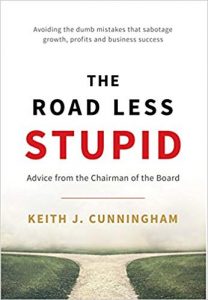
What is one non-fiction book that has helped you in your life or business that you would recommend to others?
The Road Less Stupid, by Keith J. Cunningham
You can find Tom here:
Website: interviewvalet.com
Today’s Information: interviewvalet.com/unemployed
Book: Podcast Guest Profits